Irena and the architect’s relationship
Kiss of the Spider WomanIrena and the Architect’s relationship is a courtship that reaches marriage without resolving the fear governing Irena’s intimacy. The Architect offers affection, patience, and a home in which she feels she belongs; Irena responds with deep devotion, but repeatedly draws back from physical closeness. Her transformation into a panther turns that unresolved conflict into catastrophe: the husband who had promised her a shared life finds her dead, and their marriage ends before it can become a secure refuge.
Courtship and growing attachment
After a gathering where she has been congratulated by critics, Irena appears changed to the Architect: the darkness he had noticed in her before has lifted, and she seems newly able to walk freely through the street. He invites her to lunch. When he chooses a restaurant associated, he thinks, with people from her part of the world, the choice instead unsettles her. She attributes her reaction to memories of the war, and, seeing that the meal is important to him and that his lunch break is limited, she steadies herself and goes inside. The relaxed atmosphere and good food restore her enjoyment of the moment. Their growing attachment therefore begins alongside an unease that Irena conceals, while the Architect responds to her distress by offering another place rather than pressing her to explain.
As they continue seeing one another, they fall in love. The Architect is fascinated by Irena’s openness and physical affection: she watches him, caresses him, and puts her arms around him. Yet when he tries to hold her close or kiss her, she slips away. She asks that he let her kiss him instead, offering tender kisses while keeping her lips closed. The contrast is central to their courtship: Irena initiates contact and expresses affection, but sets a boundary against the reciprocal closeness he seeks. At a return visit to the restaurant, the Architect proposes marriage in a toast, saying that he intends to commit himself if she will accept him. Irena is moved to tears; they drink and hold hands, until the arrival of a strange woman abruptly interrupts their quiet happiness.
Fear, reassurance, and marriage
Irena tells the Architect that the woman greeted her in the dialect of her village, called them sisters, and warned her to beware of men. The encounter touches a fear she has carried since girlhood: stories about women like herself frightened her, and she has long feared being descended from them. She throws herself into the Architect’s arms, crying. He interprets the greeting as ordinary recognition between people from the same country and the warning as conventional advice from an older woman. His explanation calms her; she falls asleep in his arms, and he places her on a sofa, puts a pillow under her head, and covers her with a blanket. The scene presents his care as practical and gentle, though his rational account does not remove the fear that gives the encounter its force for Irena.
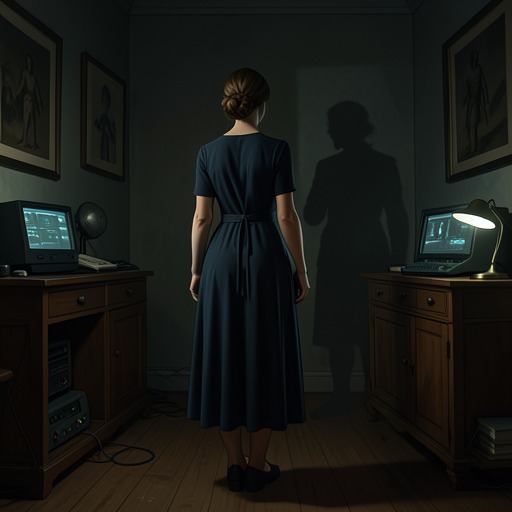
When the Architect asks her again to marry him, Irena accepts wholeheartedly. She says she feels at home in his house and does not want to leave it. Opening the dark velvet drapes and the lace curtains behind them, she takes in the home’s turn-of-the-century furnishings and asks who chose them. The Architect credits his mother with selecting the furniture and says that his mother would have loved Irena as a daughter. Irena kisses him on the forehead with almost devotional tenderness and begs him never to leave her. What she most wants, she says, is to wake each morning and find him beside her. At the same time, she asks for time before becoming a wife in the full intimate sense, until her fears have subsided. The Architect agrees, and they marry; on their wedding night, she sleeps in the bed while he sleeps on the sofa. Their domestic commitment is real, but it begins with the central difficulty still present rather than overcome.
Intimacy under pressure
The later crisis reveals how fragile that arrangement remains. After an incident at a pool, the Architect’s assistant summons him to the women’s hotel and then to the police station. The Architect leaves the Psychiatrist alone at the house only briefly while he goes to meet Irena. When Irena returns and encounters the Psychiatrist, she feels both repulsion and desire. She also feels abandoned, believing that nobody wants her and that her husband has forsaken her. The Architect’s temporary absence is part of the immediate circumstances of the scene; it does not establish that he has ended their attachment. But, for Irena, the absence intensifies the loneliness already lodged within their marriage.
Irena throws herself into the Psychiatrist’s arms, and he mistakes her distress for sexual interest. He believes that kissing her and going further might cure her belief that she is a panther woman. Their embrace repeats, in a darker form, the courtship’s pattern of closeness and retreat: when Irena slips out of his arms and moves beyond the table lamp’s light, the fear the Architect had once soothed becomes a physical transformation. She kills the Psychiatrist. The Architect is not present for the attack, and the episode is not a reconciliation or a renewal of the marriage; it exposes the limits of the reassurance and patience that had sustained their life together.
Death and the relationship’s ending
After freeing the panther from its cage at the zoo, Irena is knocked down as the animal leaps out; it runs into the road and is struck by a police car. The Architect reaches the cages and finds Irena lying on the cobblestones where they first met. Her face has been disfigured by a claw, and she is dead. The place of her death returns the story to the beginning of their bond, but reverses its promise: the woman who had once seemed free to walk wherever she wanted ends there, beside the animal bound to her feared identity. The Architect and his young assistant leave arm in arm, trying to put the spectacle behind them. The marriage’s ending is thus not a completed passage from fear to intimacy. The Architect gave Irena a home and accepted the limits she asked him to respect, but neither marriage nor affection could settle the fear that finally overtook her.